The megawatt-class S2000 system marks a significant progress for China in the field of high-altitude wind energy. One of the core supports for this breakthrough is the innovative application of high-performance composite materials.
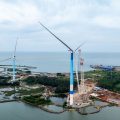
A colossal, futuristic-looking structure launched at an altitude of 2,000 metres: the S2000 floating wind power generation system independently developed by Beijing Linyi Yunchuan Energy Technology Co., Ltd (Sawes) completed a test flight in Yibin, Southwest China’s Sichuan province. This 60-metre-long, 40-metre-wide, and 40-metre-high airborne power station achieved its full-course test flight, hovering stably in strong winds, while accumulating 385 kilowatt hours of power and completing the grid-connected power generation test.
According to Sawes, studies have shown that high-altitude wind power, as a new form of wind energy utilisation, can obtain several times or even tens of times more electricity while maintaining the low-carbon advantages of traditional wind power.
The S2000 system has the ability to “generate electricity in the sky” and hinges on overcoming the material limitations of traditional wind power. The extreme conditions of high-altitude environments, such as strong winds, temperature differences, and lightning, place stringent demands on the lightweight, high-strength, and weather-resistant properties of materials. The research team, in collaboration with Tsinghua University and the Aerospace Information Research Institute of the Chinese Academy of Sciences, ultimately selected a resin-based composite structure interwoven with carbon fibre and Kevlar fibre as the core material system.
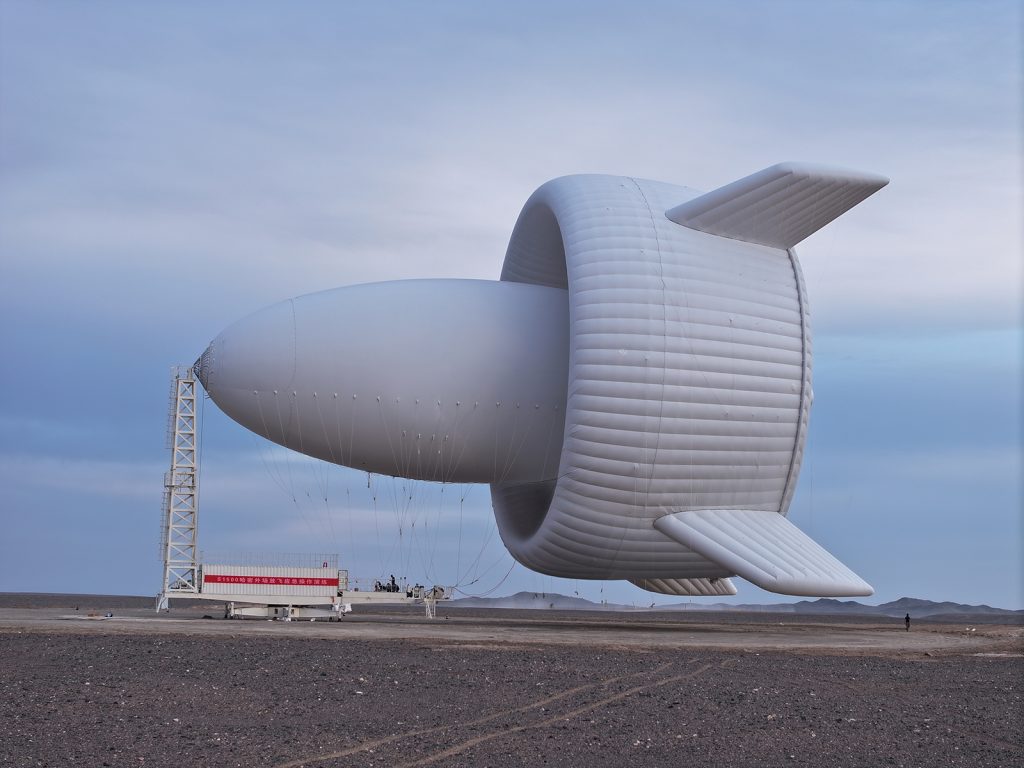
According to Sawes CEO Don Tuanrui, the S2000 flight test marks the official start of the industrialisation of floating wind power (photo source: Sawes).
More efficient than traditional wind energy
In terms of main structural design, the S2000’s main airbag and giant duct formed by the ring fins are entirely made of composite materials. Combined with the inflatable structural design, it can adapt to different wind speeds by adjusting the internal air pressure, maintaining stability even when encountering gusts of up to 30 m/s. Compared to the steel used in traditional wind turbine towers, this composite material weighs only one-tenth of the steel, yet achieves more than three times the strength. This is the core reason why the S2000 does not require the construction of large-tonnage towers and concrete foundations, directly saving 40% of material usage and reducing the cost per kilowatt-hour by 30%.
The three mooring cables connecting the aerial platform to the ground are a prime example of integrated composite material innovation. This “aerial lifeline” is woven from multi-strand carbon fibre composite material, internally integrating a high-voltage transmission line, achieving a three-in-one function of “anchoring, power transmission, and communication.” Its tensile strength reaches 3000 MPa, equivalent to six times that of steel of the same thickness, capable of stably bearing the weight of the entire system while transmitting power to the ground with less than 5% loss. The cables also embed stress sensors and multiple insulation layers, immediately triggering a protection mechanism in case of abnormal tension; even if a single strand breaks, the remaining portion can still withstand 80% of the rated load, according to Sawes.
The achievement of adaptability to extreme environments also relies heavily on composite material technology. Addressing the challenges of large diurnal temperature variations and intense ultraviolet radiation, the R&D team customized a modified polyurethane composite coating for the airbag surface. This material can withstand temperature fluctuations from -60℃ to 60℃ and possesses excellent resistance to ultraviolet aging, ensuring that the airbag does not leak or age structurally during long-term operation at high altitudes. The blades of the 12 sets of 100 kW generator units inside the duct are made of carbon fibre epoxy resin-based composite materials, which not only reduce weight by more than 25% but also achieve automatic de-icing at -50℃ through built-in heating wires, ensuring stable power generation efficiency.
It is worth noting that the main composite materials are entirely produced locally, Sawes underlines. The R&D team, in collaboration with the production base, overcame the autoclave-RTM composite molding technology, reducing the manufacturing cycle of the duct structure from 72 hours to 18 hours and increasing material utilisation to 85%, laying the foundation for subsequent mass production.
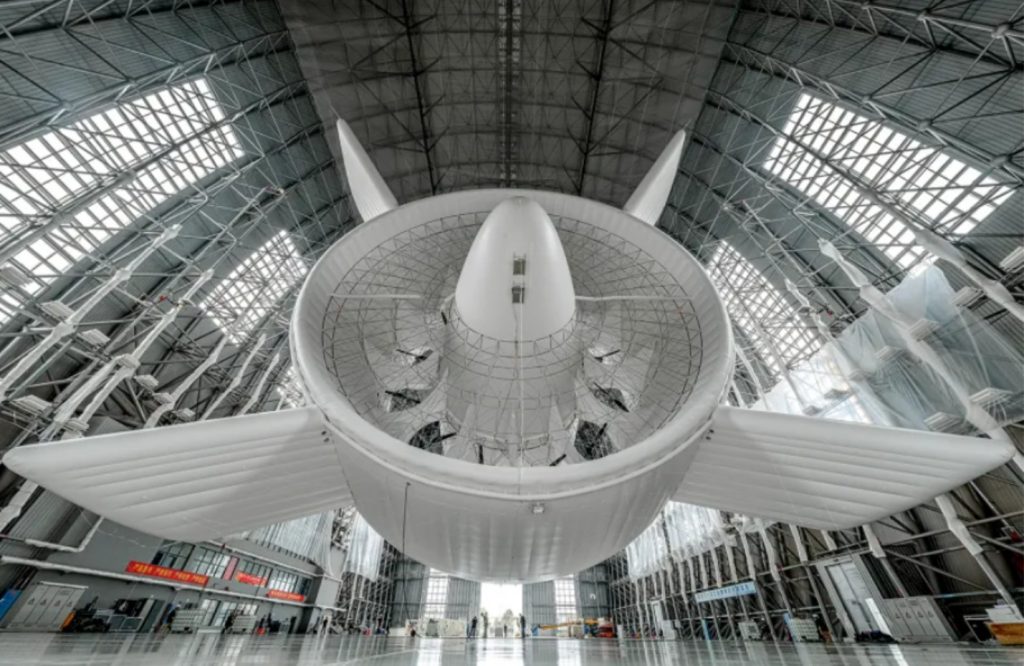
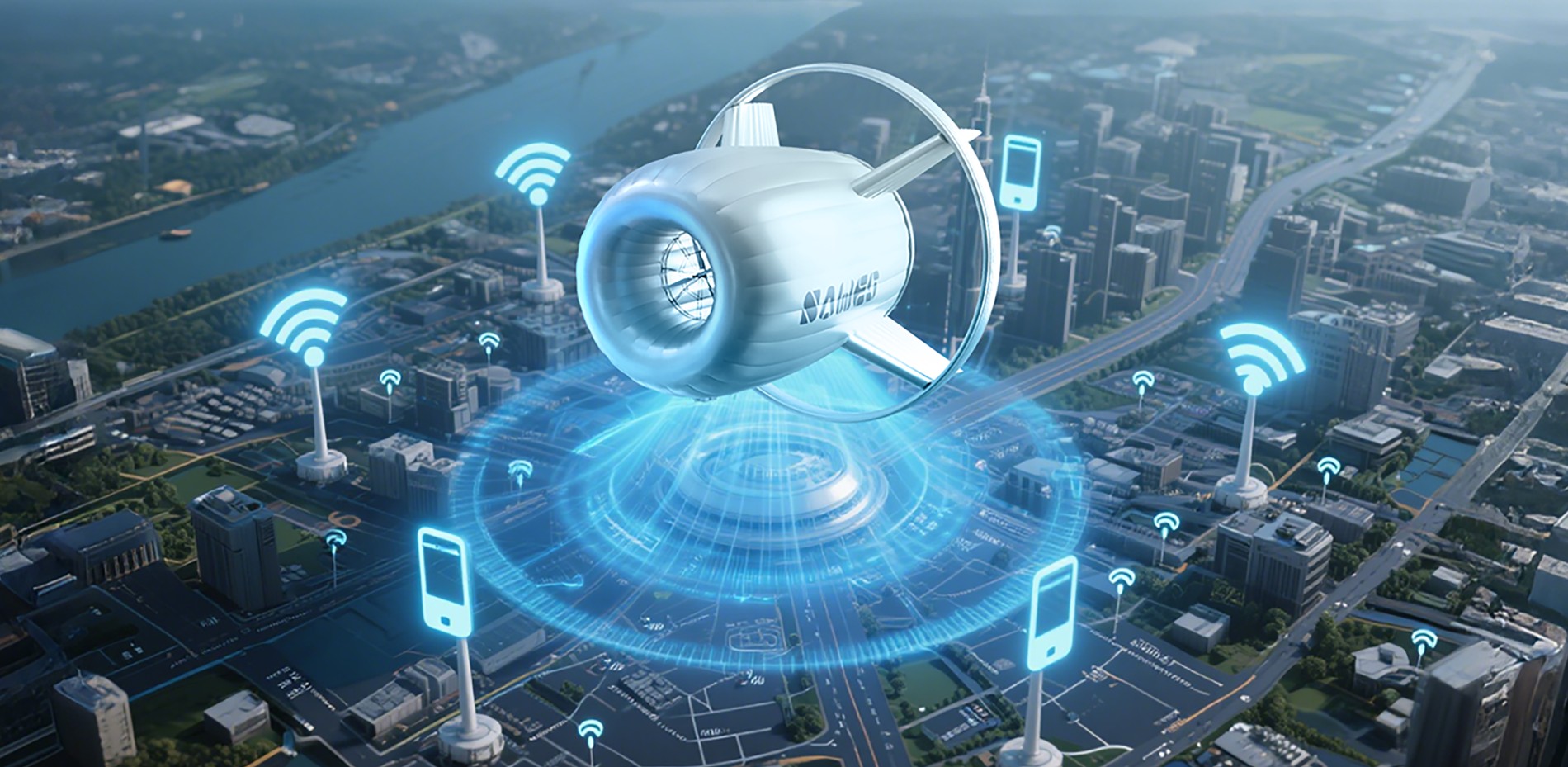
The S2000 harnesses wind power to drive its blades and generate electricity, which is then transmitted via overhead cables from the air to the ground (Photo source: Sawes)
Mobile super power bank
From the S500 system achieving 50 kilowatts of power generation using first-generation composite materials in 2024, to the S2000 system in early 2026, each technological upgrade of composite materials has driven leapfrog development in system performance. Dun Tianrui, CEO of Sawes, emphasised at a previous test flight site: “The breakthrough in composite materials has turned high-altitude wind energy from theory into reality. Our system can operate stably under extreme conditions such as strong winds and low temperatures at high altitudes. The core reason is that we have mastered the independent intellectual property rights of material formulation and structural design.”
In application scenarios, the lightweight advantages of composite materials are becoming increasingly prominent. For emergency rescue, the modular composite structure of the floating system allows it to be disassembled and transferred within 24 hours and take off to generate electricity within 2 hours, providing immediate power support to disaster areas. In remote areas such as islands and reefs in the South China Sea and the Qinghai-Tibet Plateau, its corrosion-resistant and low-temperature-resistant composite materials can adapt to high humidity and frigid environments, becoming a “mobile super power bank” that does not require grid coverage.
From laboratory material formulation calculations in 2017 to today’s stable suspension, this Chinese R&D team, led by the post-1995 generation, has dedicated eight years to using composite materials as the key to accessing high-altitude wind energy. The successful test flight of the S2000 not only signifies that China has gained a voice in the field of floating wind power, but also proves the disruptive driving role of composite material technology in the new energy industry. According to Dun Tianrui, CEO of Sawes, the currently mature S1500 and S2000 platforms have accumulated orders of nearly RMB 500 million; the next generation of S4000 and S6000 products is progressing simultaneously, with the S6000 specifically targeting stratospheric floating wind turbine technology. These “aerial power stations” constructed from composite materials, will offer a Chinese solution combining economy and safety for the global energy transition.
More information: www.sawestoone.com
This article was commissioned and published by JEC Group.